
West Africa Gold Mining 2026: Why Policy Beats Geology

Cocoa built Ghana's reputation, and oil once promised to modernize it, but in 2025 a third contender quietly outran them both and rewrote the country's export story. The most valuable thing leaving Ghana that year was not cocoa, and it was not oil – it was gold. Gold export earnings reached roughly 20 billion dollars, close to double the 10.3 billion recorded the year before, according to Bank of Ghana data reported in the Bank of Ghana Summary of Economic and Financial Data. Total exports hit 31.1 billion dollars, gross international reserves climbed to a record 13.8 billion, and the trade surplus widened to 13.7 billion from 3.8 billion a year earlier. One commodity did most of that work.
That is easy to misread as a price story: gold rose, exports rose, end of analysis. The more useful reading is structural. West Africa is not discovering gold for the first time. It is returning to it after fifty years of gradual accumulation, at precisely the moment when governments across the region have decided to renegotiate who captures the value. For institutional capital, that second development matters considerably more than the first.
Why West African Gold Production Is Rebounding in 2026
The regional picture entering 2026 is a recovery, but not a uniform one. After a weaker 2025, when output across Ghana, Mali, Guinea and Burkina Faso declined by 2.4 percent, production is expected to rebound by 8 percent this year. The drivers are mine restarts, project ramp-ups, and improved operating performance rather than new discoveries.
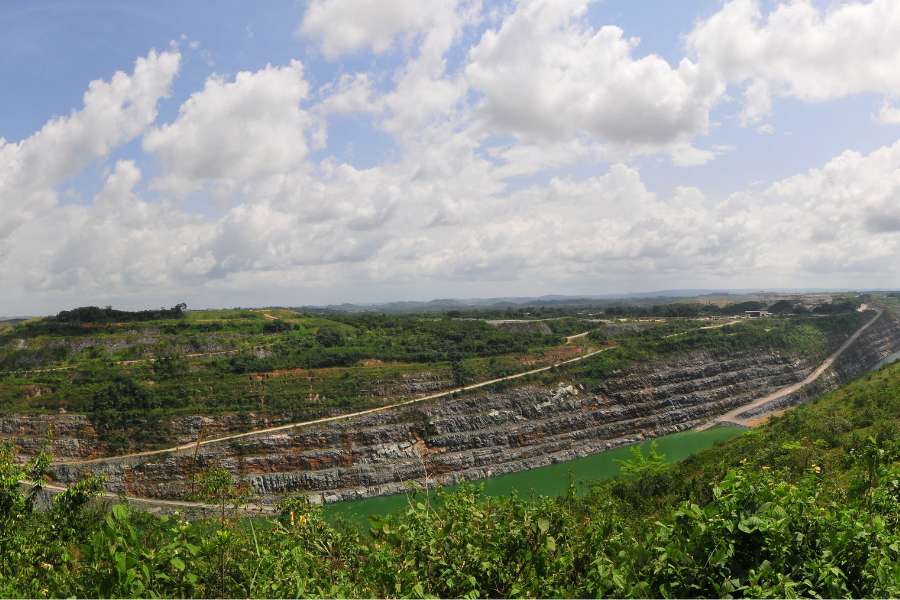
Ghana anchors the region and remains the continent's largest producer, with output climbing more than 23 percent in 2025 to a record 5.94 million ounces. Burkina Faso should add roughly 7 percent this year as Kiaka, a large open-pit project that began producing recently, scales up toward its first full year of output. That gain is temporary, however. Planned closures at Essakane, Bombore, Yaramoko and Boungou, four mature assets nearing the end of their reserves, point to a weaker profile after 2026. The more interesting movement is at the edges. Ivory Coast is expected to become the third-largest producer in West Africa this year, overtaking Mali, while Senegal benefits from two new developments at Makabingui and Diamba Sud and an underground expansion at Sabodala-Massawa, its largest existing mine, which extends the life of a producing asset rather than starting from nothing. Smaller producers including Niger, Liberia and Sierra Leone are forecast to grow 3.8 percent collectively.
Underlying it all is the Birimian greenstone belt, an ancient formation sweeping from Senegal through Guinea, Sierra Leone, Ivory Coast, Ghana and into Burkina Faso and Mali. The six largest producers sitting on that belt, Ghana, Mali, Burkina Faso, Ivory Coast, Guinea and Senegal, together account for well over 400 tonnes of gold annually, more than East and Southern Africa combined. The geology is not new and has been mapped for decades. But two things have changed: prices are high enough to make lower-grade deposits worth mining, and governments are now deciding who keeps the proceeds.
How Resource Nationalism Is Redrawing Mining Ownership in the Sahel
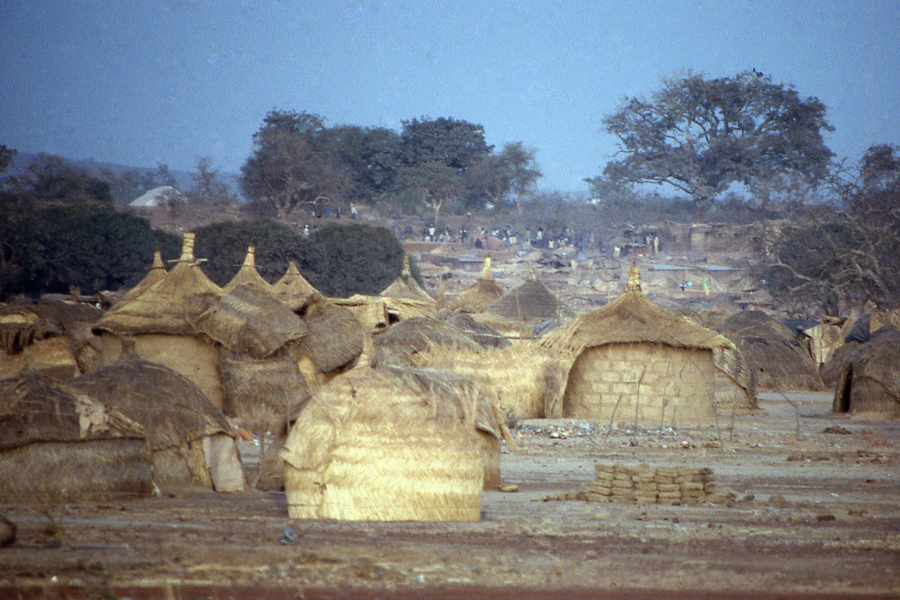
Nowhere has that shift moved faster than in the Sahel, the dry belt running along the southern edge of the Sahara that includes Mali, Burkina Faso and Niger. Mali rewrote its mining code in 2023, raising the state and local ownership stake in projects from 20 percent to as much as 35 percent and lifting royalties from 6.5 percent to 10 percent. It then enforced those terms hard, recovering an estimated 1.2 billion dollars in back payments by late 2025.
The defining case was the standoff with Barrick Mining over Loulo-Gounkoto, a mining complex that produces about 40 percent of Mali's gold. Mali stopped exports, seized gold stocks, held employees, and applied the new mining code to a contract signed before that code existed. The dispute went to the International Centre for Settlement of Investment Disputes (ICSID) before both sides reached a settlement in November 2025. Barrick paid about $430 million and lost an estimated $1.9 billion in revenue. Mali lost out on tax and royalty income while the mine sat idle, and national gold output dropped 19 percent in 2025 to 81.2 tonnes. The mining permit has since been renewed for ten years, and Barrick expects to produce 260,000 to 290,000 attributable ounces in 2026.
Burkina Faso has pursued a quieter version of the same objective. By the end of 2025, Burkinabe companies controlled six of the fifteen active industrial gold mines in the country, with the state directly holding three through the Burkina Faso Mining Participation Company, known by its French acronym SOPAMIB. Ghana has taken a third path, formalizing rather than expropriating. The Ghana Gold Board (GoldBod), established under legislation passed in 2025, brought artisanal and small-scale gold trading into official channels and exported more than 100 tonnes in its first year of operation, generating around 10 billion dollars. The Finance Ministry has attributed a substantial share of the 41 percent appreciation of the cedi against the dollar that year.
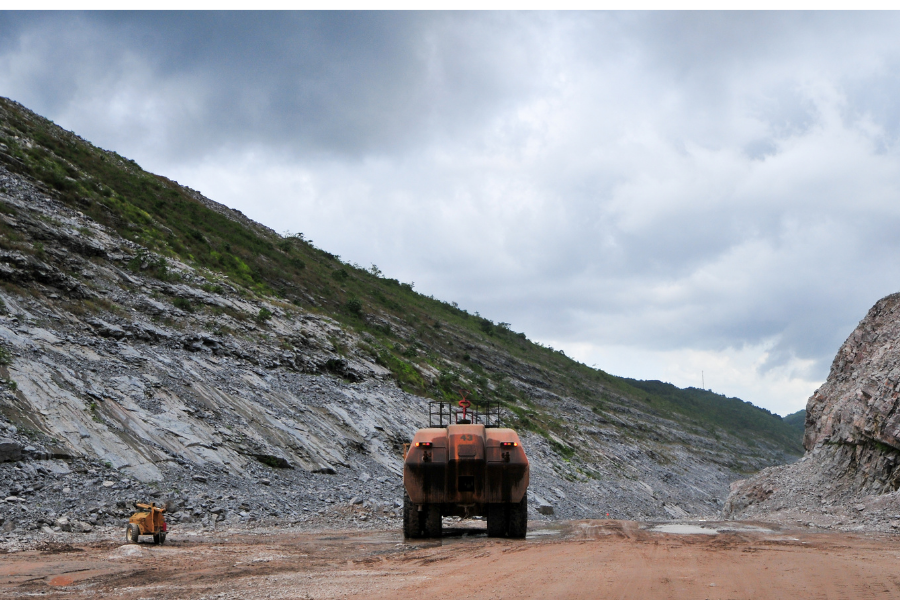
Three countries, three models, one direction of travel. The question for any allocator is no longer whether terms will be renegotiated but how, and with what regard for existing contracts.
Where Exploration Capital Is Actually Moving
Capital has answered that question with some clarity. Ivory Coast attracted 186 million dollars in mineral exploration investment during 2025, up from 102 million in 2024, the single largest increase anywhere on the African continent according to the World Exploration Trends 2026 report from S&P Global Market Intelligence. Continental exploration spending reached 1.44 billion dollars over the same period.
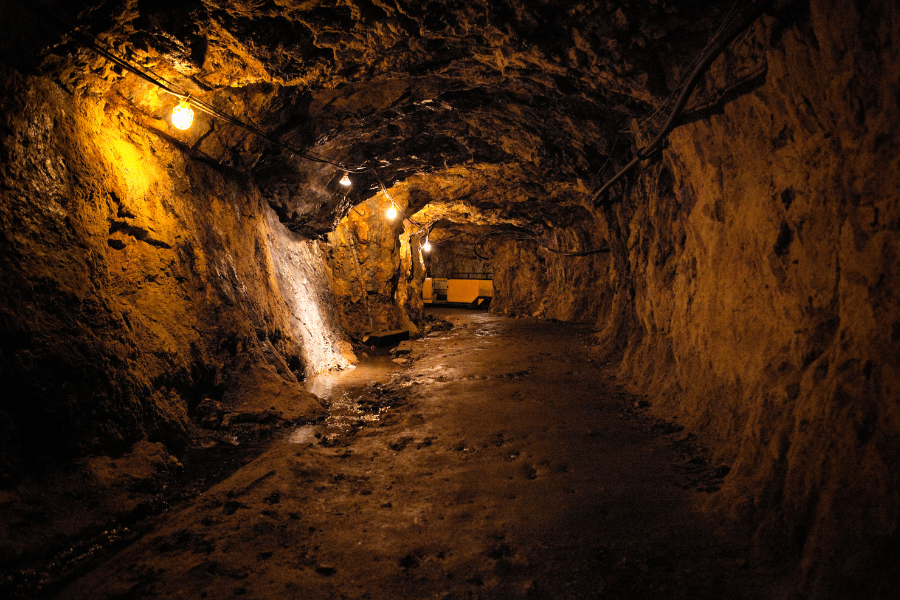
The Ivorian government has been deliberate about capturing that flow, granting 171 research permits out of 225 applications in 2025, up from 151 of 189 in 2023, and now hosting nineteen operational mines across gold, manganese, bauxite and nickel. Recent commitments include a planned 780 million dollar investment from Chinese group Huaxin Gold and a final investment decision from Resolute Mining on the Doropo project, a gold mine in the northeast of the country. The Fraser Institute annual survey now ranks the country fifth on the continent for mining investment attractiveness, and authorities expect output to keep climbing as existing mines expand.
None of this is because Ivorian geology is superior to Malian geology. It is not. Both sit on the same greenstone belt. The differential is regulatory predictability, permitting timelines, and the absence of the security costs that raise insurance premiums across the Sahel. Capital is not fleeing West Africa. It is sorting within it.
What the New Gold Cycle Means for Long-Term Capital Allocation
The demand side is unusually durable, which is what separates this cycle from previous ones. Central banks added a net 289 tonnes of gold in the second quarter of 2026, a 62 percent increase year on year and the strongest second quarter on record, according to Gold Demand Trends data from the World Gold Council. They did so while prices were falling sharply, which is the point. Reserve managers are not trading positions. Gold has now surpassed United States Treasuries as the largest reserve asset held by foreign central banks for the first time since 1996.
Three implications follow for allocators, and none of them are about forecasting commodity prices.
First, jurisdiction now matters more than geology. Even where the underlying deposits look similar across a shared formation, expected returns come down to fiscal terms, contract stability, and security costs. Treating West Africa as one uniform exposure will misprice every position within it.
Second, governments are acting as counterparties, not just regulators. Higher royalties, bigger equity stakes, and formalization programs are not temporary reactions to high prices — they reflect a lasting political stance on capturing value, one unlikely to reverse when prices drop. What matters is whether governments carry this out through stable, negotiated terms or through retroactive moves.
The third is that formalization is already paying off economically, which means more governments will likely follow. The reserve growth and currency stability Ghana saw in 2025 are exactly what other finance ministries will want to replicate.
West Africa has been overlooked for too long. That's changing now, but the terms of entry shifted while no one was watching. Investors who study the mining code before the resource estimate will be better positioned than those who do it the other way around.