
How to Invest in Frontier Market Fintech — and Actually Get Your Money Out

There is no shortage of excitement about fintech in frontier markets. Young, mobile-first populations, billions of unbanked adults, and thin legacy financial infrastructure have made places like Nigeria, Bangladesh, Vietnam, and Francophone Africa some of the most talked-about investment destinations of the past decade. According to the World Economic Forum, emerging economies now contribute around 45% of global GDP, up from just 25% in 2000, and Sub-Saharan Africa remains the world's most active mobile money region, with East Africa driving the highest growth in monthly active users in 2024. Meanwhile, cash is still used in around 90% of transactions in Africa, which means fintech revenues have enormous potential to grow. That potential is increasingly being noticed at the highest levels of global finance — the IMF's April 2026 World Economic Outlook singled out Sub-Saharan Africa as one of the few regions where digital financial services adoption is outpacing GDP growth, suggesting the infrastructure being built today may be structurally more durable than the capital cycles funding it.
But the opportunity comes with a problem that does not get discussed enough: getting in is the easy part. Getting your money out is where things get complicated. Beyond the standard economic and business risks, frontier markets present political, regulatory, and legal risks, liquidity risk, currency risk, and elevated volatility — compounded by lower legal and accounting standards and greater exposure to political instability. As FINRA puts it, this is not speculation — it is the structural reality of investing in places still finding their regulatory footing. The issue is not that these markets are bad investments. Many of them are extraordinary. The issue is that most investors and founders enter without a real plan for what happens when they want — or need — to leave.
This article breaks down exactly why frontier market exits are so difficult — and why most founders and investors only start asking the right questions when it is already too late. It looks at what the most sophisticated players are actually doing to navigate currency risk, regulatory uncertainty, and illiquid markets, and at the structural shifts — from M&A consolidation to stablecoins to incorporation strategy — that are beginning to change the calculus. Some of these shifts are subtle. Some are hiding in plain sight. All of them matter enormously if you are trying to build something in a frontier market and eventually get paid for it.
Why Currency and Politics Are Your Biggest Threats
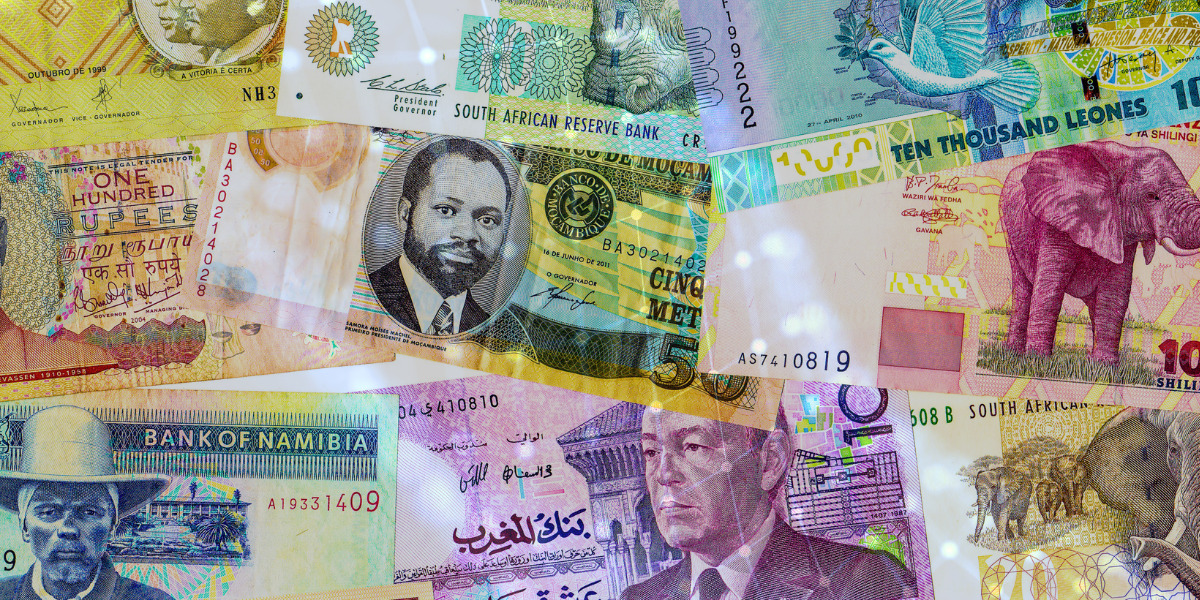
Currency risk and political instability are not footnotes in frontier market investing — they are the main event. And the unraveling often starts with something as mundane as a currency conversion. When a tech startup builds in a frontier market, its revenues are usually denominated in local currency. That sounds obvious until that currency collapses. The Nigerian naira depreciated over 40% against the dollar in 2023, while the Ghanaian cedi faced similar pressures. For a foreign investor expecting dollar returns, a thriving local business can look like a loss on a spreadsheet, simply because of how money moves across borders.
Currency is not the only hazard. Currency volatility, regulatory unpredictability, and declining capital efficiency have forced a rethink from investors across the African continent, according to TechCabal's reporting in early 2026. Geopolitical risks have become a top concern for venture capital investors, reshaping how they approach potential investments. Cross-border investors, in particular, are intensifying their due diligence, focusing on factors like supply chain stability, exposure to sanctions, and capital controls. In practice, this means an investor can build a profitable company in a frontier market and still struggle to repatriate profits if capital controls tighten, a government changes, or a central bank imposes restrictions on foreign currency outflows.
This is not a theoretical risk. According to venture capital market data from Q2 2025, geopolitical uncertainty is the top concern among VC investors at 7.5%, impacting cross-border deals and supply chain stability. Exit scarcity — a lack of IPOs and sluggish M&A — has resulted in a backlog of late-stage companies without clear paths to liquidity. In frontier markets, that backlog is even more pronounced than in developed ones.
But the data problem runs deeper than sentiment. The real structural problem is dependency. IFC research shows that roughly 80% of VC financing across Africa still originates from foreign investors, leaving the continent's innovation exposed to global cycles beyond its control. When sentiment shifts in New York or London, capital dries up in Lagos and Nairobi regardless of how good the local companies actually are. This dynamic has a compounding effect that is easy to underestimate: when foreign capital retreats, it does not just reduce available funding — it also removes the most likely acquirers, since many of the strategic buyers active in African fintech are themselves backed by the same international pools of capital that are pulling back. The result is a liquidity squeeze that hits founders at both ends simultaneously, shrinking their runway while eliminating their most probable exit counterparties.

The Exit Toolkit: What Smart Investors and Founders Are Actually Doing
Given all of this, how do sophisticated players navigate exits in volatile jurisdictions? The honest answer is: carefully, creatively, and increasingly through M&A rather than public markets.
With the IPO window still cold in frontier markets, M&A has become the strategic lever for both fintech consolidation and expansion. Strong players are acquiring niche innovators or regional champions to gain scale, while weaker fintechs face consolidation or exit. This is not a new phenomenon, but it is accelerating. The most encouraging development in recent data is venture-backed companies buying other venture-backed companies. Flutterwave's all-stock acquisition of Mono Technologies (open banking APIs for African businesses), Risevest (a Nigerian investment platform) acquiring both Chaka (fractional stock trading) in Nigeria and Hisa (US stock access) in Kenya, and OmniRetail (B2B retail infrastructure) acquiring Traction Apps (payments and lending tools for small merchants) — all signal that parts of the ecosystem, particularly West African fintech, are beginning to generate buyers from within. According to reporting by MEXC News in May 2026, a crypto exchange and financial markets news platform, this internal buyer dynamic is the closest thing to structural improvement that African venture capital has produced. What makes these deals particularly significant is not just their existence but their structure. All-stock transactions, in particular, signal that acquirers have enough confidence in their own equity as a currency to use it — a meaningful psychological threshold for an ecosystem that has historically lacked that kind of internal conviction.
Globally, KPMG's 2026 Pulse of Fintech report confirms a broader rebound: exit activity for fintech companies surged in 2025, reaching $104.4 billion across 486 exits globally — the third-highest year on record — with VC-backed exits accounting for $79.7 billion of total exit value. But most of that activity was concentrated in the United States and Europe. Frontier markets are still largely waiting for their version of this wave.
While founders and investors wait, some are not standing still — they are rewiring how money moves entirely. One increasingly important tool is stablecoins. Small and medium-sized businesses in emerging markets across Latin America, the Middle East and Africa are increasingly sidestepping local currency volatility by settling B2B invoices directly in USD-denominated stablecoins over layer-2 blockchains such as Polygon and Base, with settlement times dropping from three days to three seconds. For investors, this opens a real path: structuring revenue streams or exit proceeds in dollar-pegged digital assets can be a practical hedge against currency devaluation at the moment of exit. QED Investors, one of the most active fintech investors globally, flagged this as a defining trend for 2026.
Location of incorporation also matters enormously. Many of the most successful African and Southeast Asian fintechs are incorporated in Singapore, the United Kingdom, or Delaware — not in the country where their operations run. Incorporation determines where a company is legally registered and governed, which shapes everything from how contracts are enforced to how a sale is structured. This is not tax evasion; it is basic exit engineering. Holding the legal entity in a jurisdiction with stable courts, clear property rights, and functioning capital markets means that when a global acquirer comes knocking, the deal mechanics are straightforward. When the company is incorporated locally in a country with capital controls, the deal becomes a legal and regulatory obstacle course.
Sophisticated investors like Silverback Holdings — a Mauritius-based private investment firm backing high-growth African tech startups — demonstrate how this works in practice. In May 2025, Silverback holdings received a 29x return from LemFi — a diaspora-focused remittance and multi-currency platform serving Africans abroad — and 5x partial exit return from OmniRetail, showing how consistent returns are achievable despite challenging conditions. In fact, Silverback reports a 13.7x multiple on invested capital from fintech investments across Africa. The key in every case was building companies that were structurally acquirable from day one, not just locally successful. As TechCabal's analysis notes, traditional corporates are increasingly viewing fintech acquisitions as digital transformation accelerators — meaning there is a buyer pool that did not exist five years ago.

The Long Game: Building Ecosystems That Can Exit
Beyond individual company strategy, there is a structural question about whether frontier market tech ecosystems can ever sustain consistent exits without depending entirely on foreign capital and foreign acquirers. The answer is slowly shifting toward yes, but it requires deliberate policy.
In 2025, Ghana took a bold step by mandating a 5% allocation of pension assets to private equity and venture capital, a move the World Economic Forum flagged as critical for building domestic capital pools. Without domestic institutional money participating in local tech ecosystems, the exit market will remain dependent on external cycles. When global risk appetite contracts — as it regularly does — frontier market founders and investors are left holding assets with no obvious buyers.
Meanwhile, regulatory clarity is emerging as a genuine competitive advantage among frontier markets themselves. Currency stability has become a source of competitive advantage — the CFA franc, a euro-pegged currency used across Francophone Africa, once criticized, now protects dollar returns for investors in Francophone Africa. Countries that can offer even a degree of monetary predictability are increasingly standing out from neighbors plagued by devaluation. Similarly, Fintech News Africa reports that South Africa, Mauritius, and Nigeria are leading the way on virtual asset regulation, giving investors greater confidence that exits through digital-asset-denominated structures will hold up legally.
The bottom line is straightforward, even if the execution is not. Fintech and tech companies can generate exceptional returns in frontier markets — the fundamentals are genuinely compelling. But exit strategy cannot be an afterthought bolted on at the end of a fund cycle. It has to be designed into the structure of the investment from the first term sheet: where the company is incorporated, how revenues are denominated, what the acquisition universe looks like, and whether stablecoins or other instruments can bridge the repatriation gap when local currency fails. The investors generating the best returns in these markets are not the ones with the highest risk tolerance. They are the ones who planned their way out before they ever went in.