
Duqm Port, Oman: A Strategic Alternative to Hormuz
Some places matter because of what is built on them. Others matter because of where they sit. And for most of history, the second has waited quietly until the world needed them. On the southeastern coast of Oman, facing the open Arabian Sea, a former fishing village is becoming one of those places. Duqm was planned for decades as an industrial and logistics hub, but its real value has been revealed by something no master plan could schedule: a world that has learned, painfully, how fragile its busiest sea lanes can be. Duqm now represents one of the most important strategic infrastructure developments of the coming decade, and the reasons go well beyond the port itself.

Why Duqm Matters Beyond the Strait of Hormuz
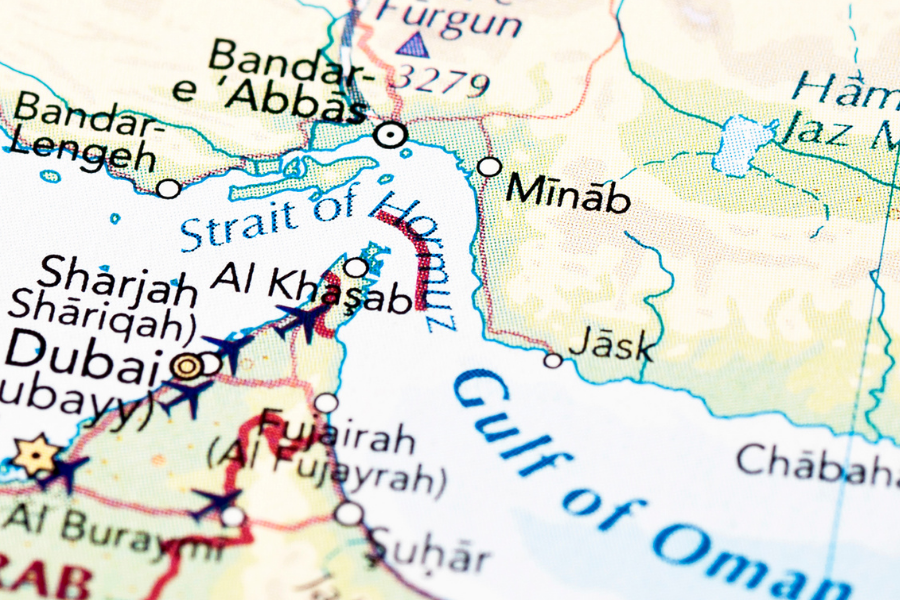
To understand Duqm, it helps to start with the narrow passage it does not depend on: the Strait of Hormuz. According to the United States Energy Information Administration, oil flows through the Strait of Hormuz averaged 20 million barrels per day in 2024, equal to about one fifth of global petroleum consumption and more than a quarter of all seaborne oil trade. Almost every major Gulf port sits on one side of that chokepoint or the other.
Duqm does not. Located roughly halfway between Muscat and Salalah, it sits, as the Gulf International Forum notes, far from both the Strait of Hormuz and the Bab el-Mandeb, the narrow strait between Yemen and the Horn of Africa that links the Red Sea to the Indian Ocean. By contrast, the main ports of Dubai, Qatar, Kuwait and the Saudi Red Sea coast all depend on one of those two passages to trade with Asia. Shipping companies have taken notice. In October 2025, Japanese carrier NYK Line signed a strategic agreement with Duqm, and major credit rating agencies have observed that export facilities at Duqm and Sohar allow shipments to bypass the Strait of Hormuz entirely.
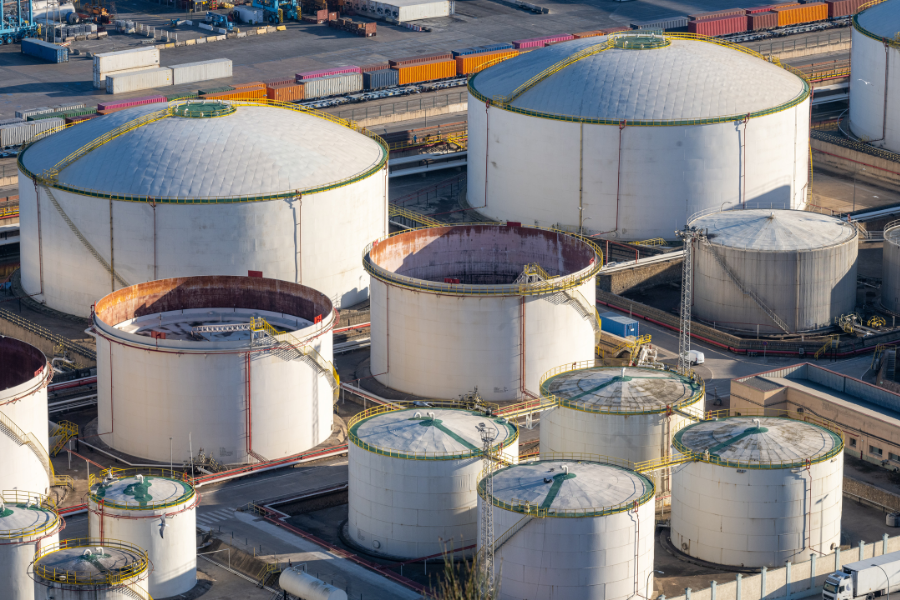
The year 2026 turned that observation into a stress test. During the conflict between the United States, Israel, and Iran, the port itself came under fire. In early March, drones struck a fuel tank at the Duqm commercial port, following an attack days earlier that injured a worker. Fortunately, the damage was contained and operations resumed but the episode showed both sides of the Duqm story at once. Location outside the strait does not make a port immune to regional conflict, but it does make it far harder to shut down global trade by closing a single waterway.
The Duqm Special Economic Zone: Refining, Storage and Green Hydrogen
A port on its own is only a door. What gives Duqm its long-term weight is what is being built behind it: an industrial base inside the Special Economic Zone, rising in three layers.
The anchor is the refinery. Developed by OQ8, a joint venture between the Omani state energy group OQ and Kuwait Petroleum International, the $9 billion facility processes 230,000 barrels of crude oil per day and was described at its launch as the largest joint refining and petrochemical investment ever made between two members of the Gulf Cooperation Council. For Kuwait, whose own exports must leave through the Strait of Hormuz, a refinery on the Arabian Sea is a practical hedge as much as a commercial asset.
Storage is the next layer. Oman now plans to raise crude storage at Duqm to about 10 million barrels over the next three years, with the aim of turning the Ras Markaz terminal into a regional storage and trading hub where oil can be held and exported without crossing the strait. The state energy group is even considering very large crude carriers as floating storage at the port.
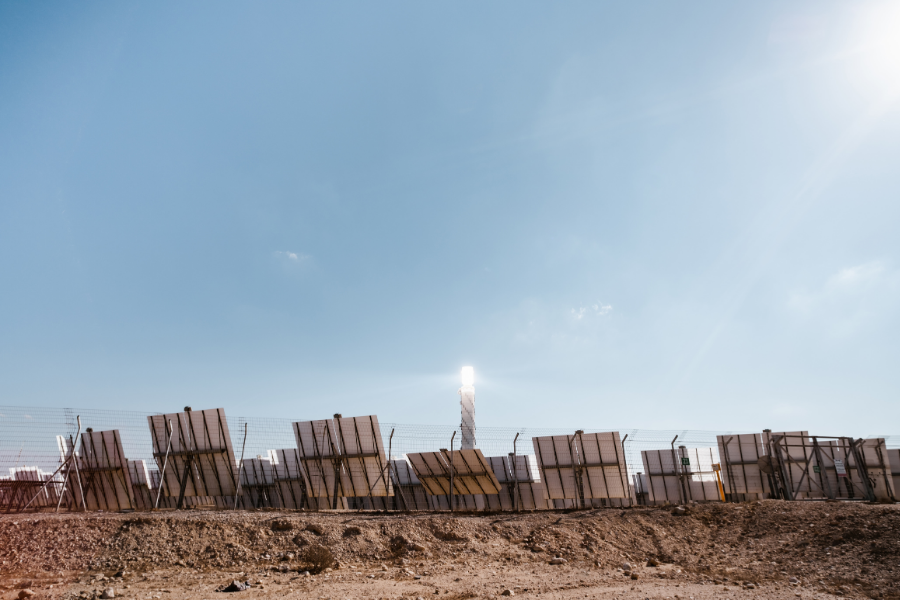
The third layer looks further ahead. Duqm sits at the centre of the Omani green hydrogen strategy, with the national developer Hydrogen Oman now overseeing nine large-scale projects with combined expected investment above $50 billion and a target of 1.5 million tons of green hydrogen a year by 2030. One of the largest, led by French utility Engie and the Korean steelmaker Posco, plans up to 5 gigawatts of wind and solar power and 1.2 million tons of green ammonia a year for export to South Korea, with first shipments planned for 2030. If even part of this pipeline is delivered, Duqm would connect the old energy economy and the new one through the same quay.
Duqm and the Strategic Contest for the Indian Ocean
Energy alone does not explain why so many governments are paying attention. The western Indian Ocean has become a crowded strategic space, and Duqm sits at one of its natural crossroads, between the Gulf, South Asia and the coast of East Africa.
India recognized this early. Its agreement with Oman covers access, maintenance and logistics for Indian naval vessels at Duqm, as analysts at the Lowy Institute described it, in what they called a 'base race' across the Indian Ocean. Other partners, including the United States and the United Kingdom, also value the port for naval support outside the Gulf. Oman, long known for its diplomatic balancing, has managed to keep these relationships open without turning Duqm into the exclusive outpost of any single power.
The African dimension is easier to overlook but may matter just as much. Duqm faces the same ocean as Mombasa, Dar es Salaam and Berbera, with direct sea routes to East Africa that avoid both the Strait of Hormuz and the Red Sea. As Gulf investors expand along the African coast, a hub that can refine fuel, store it and ship it south without passing a chokepoint becomes a natural link in that chain. For a region that increasingly sees the Gulf and Africa as one market, Duqm is part of what holds it together.
For investors, this matters for a concrete reason. When India, the United States, Kuwait and Asian buyers all depend on Duqm, a prolonged disruption becomes costly for many capitals at once. That does not guarantee returns, but it creates a powerful shared interest in keeping the port open.
The Risks and Long-Term Investment Case for Duqm
Geography can open a door, but it cannot decide what passes through it. A balanced view requires acknowledging the limits. Duqm cannot replace the Strait of Hormuz: cargo that begins or ends inside the Gulf must still pass through it, and as the analysis cited above concludes, Oman can complement the strait but not substitute for it. Many of the green hydrogen projects remain at early stages, and their economics will depend on technology costs and on buyers in Europe and Asia who are still deciding how much they will pay for low-carbon fuel. The drone strikes of 2026 also showed that geographic advantage reduces risk rather than removing it.
Yet the broader direction is clear. For decades, global trade was organized around efficiency, routing as much as possible through the shortest and cheapest passages. The past few years have added a second test: resilience. Ports that offer an alternative to a single point of failure are becoming more valuable, and Duqm is one of very few in the region that combines deep water, open-ocean access, refining, storage and room to grow.
For long-term capital, the strategic insight is not that Duqm will replace existing hubs. It is that the geography of the Indian Ocean is being redrawn around backup routes, and the assets that provide them are likely to be valued differently in the decade ahead. Investors who see resilience as a source of value, rather than a cost, will understand why a quiet stretch of the Omani coast now sits near the center of that new map.