
How Private Equity Can Win Big in the Gulf's Clean Energy Boom
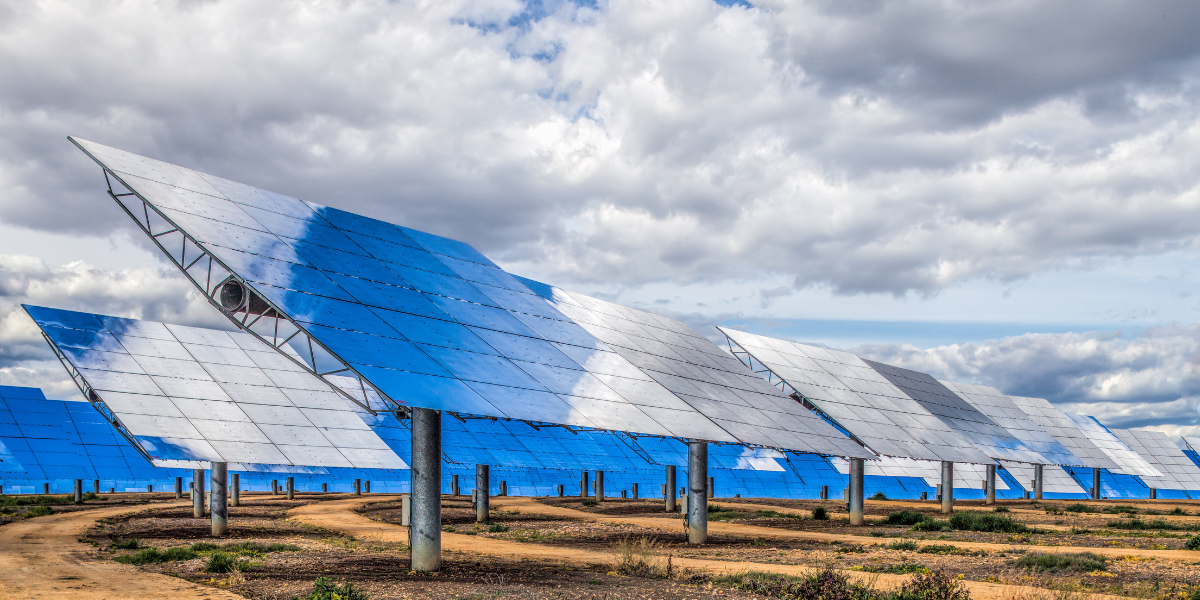
One of the most oil-dependent regions in the world is quietly rewriting its energy playbook. In the Gulf region, renewable energy sources are no longer symbolic—they are increasingly driven by falling electricity prices. The Gulf Cooperation Council (GCC), which consists ofBahrain, Kuwait, Oman, Qatar, Saudi Arabia, and the UAE, is undergoing one of the most significant energy transitions globally, shifting away from oil and gas as renewable costs fall and incentives realign. According to Rystad Energy, solar power in the region is now often cheaper than fossil fuel-based electricity, driven by lower technology costs and highly competitive auctions. As a result, governments are rolling out large-scale tenders and accelerating the deployment of utility-scale solar projects across the region.
This shift is not merely about environmental commitments or global perception. Gulf states are strategically aligning their long-term economic plans with sustainability, making clean energy a central pillar of diversification. Several GCC countries have already committed to net-zero emissions. According to regional policy research by ORF Middle East, Saudi Arabia seeks net-zero emissions by 2060, and Oman and the UAE by 2050. Meeting these pledges requires an enormous buildout of renewable capacity, hydrogen infrastructure, and transmission networks. Estimates suggest that the Gulf will need tens of billions of dollars in new investment over the next decade to meet its renewable energy milestones, much of which has yet to be financed, according to a recent analysis by the Center on Global Energy Policy at Columbia University. Ambition, however, is only half the equation. The harder task lies in building the financial and contractual machinery that can turn targets into capacity.
As these transitions move from policy targets to tangible projects, governments are also pivoting toward more competitive and transparent energy markets. A key move has been the expansion of the independent power producer (IPP) model for renewable energy projects, under which private companies finance, build, own, and operate power plants, selling electricity to the state or utilities under long-term contracts. According to MEED (a Middle East business intelligence publication), GCC governments and state-owned utilities are currently inviting private developers to build and operate nearly 24 gigawatts (GW) of new renewable power capacity—roughly equivalent to the entire electricity capacity of a mid-sized European country. By relying on long-term power-purchase agreements, large-scale auctions, and liberalized investment rules, GCC governments are making the clean energy landscape more accessible and attractive to private equity (PE) firms, institutional investors, and global developers. With mature policy frameworks, the challenge is now execution: deploying capital effectively, structuring projects, and ensuring operational capability. Success favors investors with hands-on expertise, not just deep pockets.
Crucially, this transition is unfolding as a system evolution rather than a sudden substitution: hydrocarbons remain part of the Gulf’s energy mix, but their role is increasingly defined by flexibility, efficiency, and integration with low-carbon technologies.
Why Mid-Cap Private Equity Makes Sense Now
As execution becomes the key challenge, a critical segment is emerging between state-backed megaprojects and early-stage pilots: scalable, commercially viable projects that can move quickly without political delays. Mid-market private equity—deals typically ranging from $50 million to a few hundred million—sits at a strategically advantageous point in the Gulf's energy transition. These deals are small enough to execute quickly yet large enough to shape national energy systems. Private equity investors are becoming increasingly active alongside powerful sovereign wealth funds (SWFs) such as Saudi Arabia’s PIF and Abu Dhabi’s ADIA. While SWFs bring deep capital pools and long investment horizons, PE funds contribute operational discipline, flexible deal structures, and the ability to scale mid-sized developers and technology firms that might otherwise struggle to compete with state-backed giants. This pairing of sovereign capital and private equity agility is becoming a defining feature of the GCC’s emerging energy model.
As energy markets open to private capital, these reforms create a clear entry point for mid-cap investors aligned with national priorities. Projects such as solar farms, wind clusters, energy-efficiency retrofits, battery installations, and hydrogen pilot facilities typically require capital injections that fit squarely within this deal bracket. These investments allow governments to share the burden of building and operating projects—reducing delays, cost overruns, and delivery risk—while offering private investors stable, contracted cash flows through long-term PPAs (Power Purchase Agreements—fixed-price contracts under which governments or state-owned utilities commit to buy electricity from privately built projects for many years). So, as the Gulf diversifies its power sector, smaller renewable energy developers, engineering firms, storage companies, and mobility providers will increasingly need both capital and operational expertise to grow. Mid-cap structures are particularly well suited to this phase of expansion, supporting execution-focused businesses that sit between early innovation and full-scale deployment.
Where PE Can Really Move the Needle
The next phase of the GCC’s energy transition will be defined less by headline capacity additions and more by how projects are executed on the ground. As renewable penetration rises, value is shifting toward execution-intensive segments such as operations and maintenance, grid balancing, storage integration, and digital optimization—layers that keep power systems stable and profitable. These areas are essential to scaling renewables reliably, yet they rarely attract sovereign megacapital, creating space for mid-cap private equity. As governments deploy large volumes of new capacity, bottlenecks are emerging around intermittency management, grid connectivity, and lifecycle efficiency. Companies offering advanced monitoring, predictive maintenance, storage-as-a-service, and energy management software are becoming core infrastructure rather than optional add-ons. These pressures are most acute at the grid level, where rising renewable output is straining infrastructure not designed for variable power flows. Beyond generation, grid upgrades and storage stand out as some of the most urgent—and investable—needs. Demand is rising for batteries, advanced substations, and digital grid management tools, with GCC policy specialists emphasizing grid modernization and financial de-risking as central pillars of national energy plans, as noted in the 2024 IRENA Policy Talk. For PE investors, these segments offer recurring revenues, long-term contracts, and exposure to system-wide demand growth.
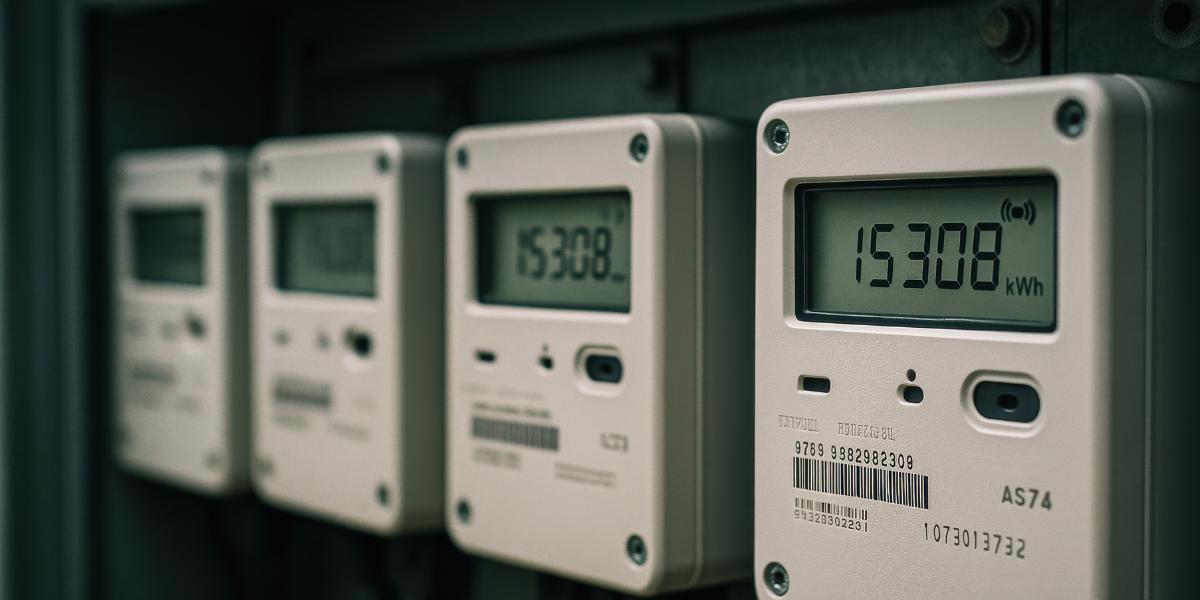
Yet simply adding more capacity will not be enough to ensure system stability. Energy efficiency is a powerful—and often overlooked—lever for easing grid stress, improving system economics, and cutting emissions at the lowest cost. Buildings and industry consume vast amounts of power in the Gulf, much of it driven by outdated cooling and conditioning systems. Because efficiency upgrades are the most cost-effective way to reduce energy demand—a point consistently emphasized by the International Energy Agency (IEA) —GCC regulators are increasingly prioritizing these solutions. In practice, smart metering and efficient cooling can reduce electricity use by 20–40% in commercial buildings, making them economically attractive even without subsidies. This creates strong growth prospects for companies providing smart meters, water-saving technologies, and waste-to-energy solutions. At the same time, the energy transition is driving demand for scalable platforms such as rooftop solar aggregators, mid‑size data‑center energy providers increasingly powered by solar energy through on‑site installations and renewable contracts, and EV charging and servicing networks—areas where mid-cap private equity can back future market leaders before saturation sets in. The rapid expansion of electric vehicles across the Gulf further opens investment opportunities in charging infrastructure, maintenance networks, and battery logistics.
As power systems decarbonize and grid performance improves, the remaining emissions challenge increasingly shifts beyond electricity—toward industrial processes, transport, and feedstocks that cannot be easily electrified at scale.
Hydrogen: Extending Decarbonization Beyond Power
As the Gulf scales renewable electricity, efficiency, and grid solutions, attention is increasingly turning to sectors that are harder to electrify, such as heavy industry and long-distance transport. In this sense, hydrogen represents not a departure from the Gulf’s clean-energy strategy, but its logical extension—applying the same execution-driven, infrastructure-led investment model to sectors where renewables alone are insufficient. In this context, hydrogen is emerging as a critical solution, enabling decarbonization beyond the power sector, particularly in hard-to-abate industries such as steel, chemicals, and long-distance transport where direct electrification is limited.
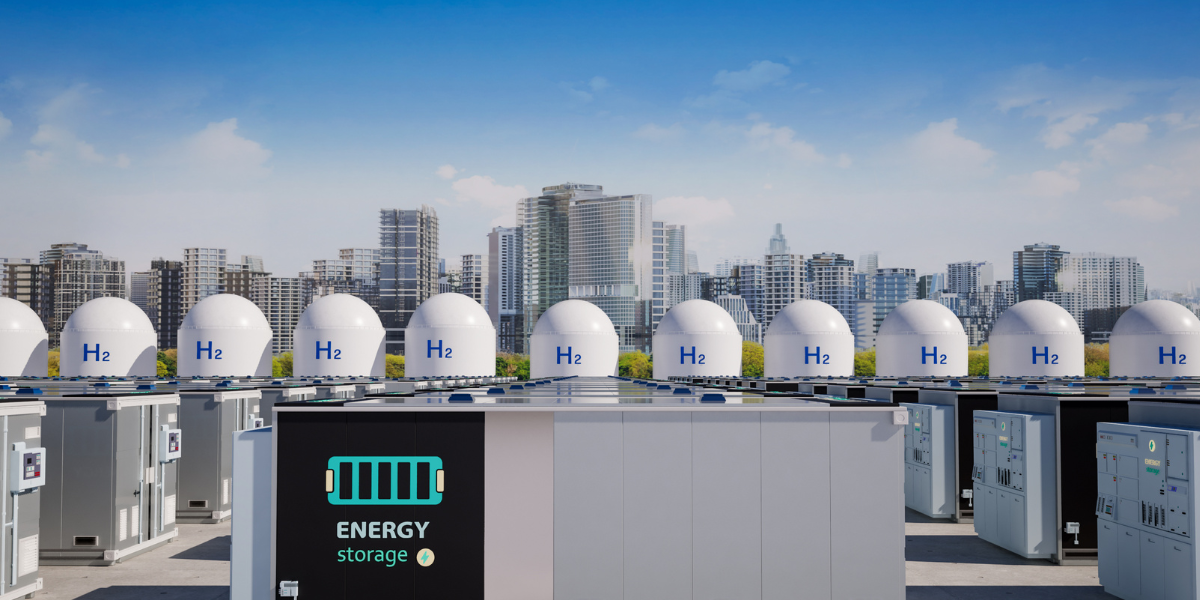
Saudi Arabia, the UAE, and Oman in particular—alongside Qatar’s gas-based initiatives— are building up their industrial systems to support both “blue hydrogen” made from natural gas and “green hydrogen” produced using renewable energy, helping diversify their energy mix and reduce emissions. For Gulf producers, blue hydrogen is increasingly viewed as a transitional pathway—leveraging existing gas infrastructure while scaling toward renewable-based hydrogen over time, rather than as an alternative to clean power investment.
While mega-projects such as NEOM’s hydrogen complex capture headlines, mid-cap opportunities exist across the value chain: electrolyzer production (equipment that splits water into hydrogen using electricity), ammonia infrastructure (used to store and transport hydrogen), hydrogen trucking, component supply, and smaller-scale industrial hydrogen hubs that serve local industry. These businesses often fall directly within PE’s preferred investment size.
As with grids, storage, and efficiency, the most attractive hydrogen opportunities for private equity lie not in flagship mega projects, but in scalable platforms that solve execution challenges across multiple sites and customers.
Turning Momentum into Markets
While hydrogen and other emerging segments offer compelling growth opportunities, realizing returns in the GCC energy transition will depend on disciplined execution and effective risk management. Success will depend less on vision and more on project delivery, regulatory clarity, and operational performance. Building and operating renewables in demanding environments requires technical depth, experienced EPC partners (engineering, procurement, and construction firms), and rigorous oversight. Long-term PPAs provide revenue visibility, but regulatory changes and contract structures can still influence returns. KPMG analysts note that regulatory or policy risks represent the top barrier to energy transition investments, underscoring the need for stable, transparent, and consistent frameworks to sustain capital flows.
That said, the structural foundations are firmly in place. GCC governments control vast pools of public capital and continue to expand auction programs and investment-friendly regulations. As Mercom India reports, the region has a deep pipeline of IPP projects requiring consistent private-sector financing. For PE funds, the combination of market certainty, strong sovereign partners, and transparent tendering processes creates an increasingly attractive investment environment. Looking ahead, the Gulf’s energy transition is set to accelerate. Political commitment is strong, long-term strategies are in place, and both public and private capital are increasingly aligned. The next phase will be shaped not only by large infrastructure projects, but by the rise of a more diverse and entrepreneurial clean-energy ecosystem. As regulations mature and markets continue to open, mid-sized companies in areas such as digital energy management, EV fleet services, localized hydrogen production, and industrial decarbonization are likely to emerge as acquisition targets or growth-equity candidates. The region’s advanced logistics infrastructure and strategic location between major global markets not only supports the export of clean technologies and low-carbon fuels, but also underpins the development of a robust domestic industrial base. For private equity firms with regional insight, patient capital, and strong execution capabilities, this presents a rare opportunity to help build scalable platforms across grids, storage, hydrogen, and energy efficiency—assets with long-term, contracted cash flows. For investors, this means exposure not just to individual projects, but to repeatable systems, signaling the GCC’s evolution from a policy-driven buildout to a durable, globally relevant investment cycle.